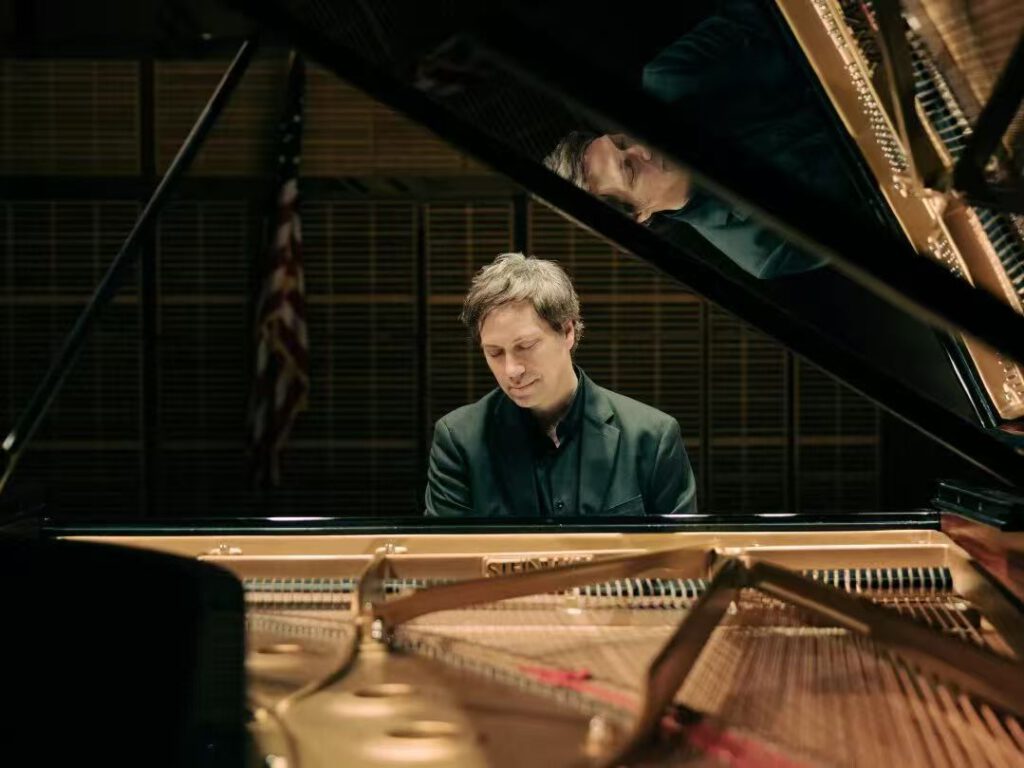
Steve Barakatt gave his debut solo recital in Kunming on April 12, 2026, performing a dozen of his famous pieces that he composed over the years.
This Canadian-Lebanese pianist and composer remains largely unknown to the Kunming audience, and the turnout was a bit low. Still, everyone present that night, having listened to his refined interpretation of the beautiful melodies, must have felt the artist’s sincere passion for music.
Earning his fame so early and being extremely successful commercially seem to have left him without any hotheadedness, egotism, or indulgence. Nearly 40 years later, he is gentle and humble as always, remains keenly sensitive to the world, draws inspiration from everywhere, and focuses his mind on composing, resulting in prolific popular works that are ear-pleasing, heart-enriching, plus full of modern flavor, some of which express humanity.
“I consider music a friend.”
–An Exclusive Interview with Steve Barakatt at His Kunming Debut
Interviewed by Tan Shuo on April 12, 2026
Your first solo album Double Joie was released when you were just 14, and it was a great hit. You earned reputation and fame so early. I’m wondering what drove you in the 1980s, when you were still a teenager, to devote yourself to composing?
It had been a long journey, because I started the music at the age of five years old, and I studied classical music at an early age in Canada where I was born. Of course, it had been a long process. I studied classical, and then I switched to jazz music when I was about eleven and twelve. For me jazz was the beginning of composition, because you improvise. Jazz opened me to improvisation, and composition came a little bit later. So yes, it was a big decision for me to decide to compose my own music, and it was a process step by step – starting from the classical music, jazz and then composition.
Now, nearly 40 years have passed, you seem to follow the same path, i.e., let melody dominate the music. Do you think the same, or do you think you are a different composer now compared to your teenage years?
I would say that writing music is a reflection of our existence as human beings. It’s also the expression of my first language, because for me music is actually my first language before French and English. And the fact is we grow with music as a best friend – I consider music a friend, I share music all over. You know my experience – traveling, meeting people – it’s a long process and for sure the music evolves because we want to explore when we meet other musicians, when we meet other cultures, we explore more. And the result of music has a big influence on our life basically.
So, if I go through from your first album to your latest, I can feel how your life has progressed?
Yes, I think so, and also the phases of life. Like everybody, I think we all have phases in life – when you meet your love, when you have your first child – these moments are part of your life and of course it has an impact on our writing as an artist. And also the people we meet, the movies we see, the food we taste, so yes, you can feel it, you can feel my life. However, I think something is always there in my music. I think people can recognize my music, even though it has been written many years ago. I think we all have our own signature as a composer or writer or artist in general.
So does it mean that you draw inspirations from your life experience, not only nature?
Not only nature. I would say (from) people even more – people in cultures and emotions in general. Life is an accumulation of a lot of challenges – positive, negative, struggles, good news – So I think it’s part of the process of writing.
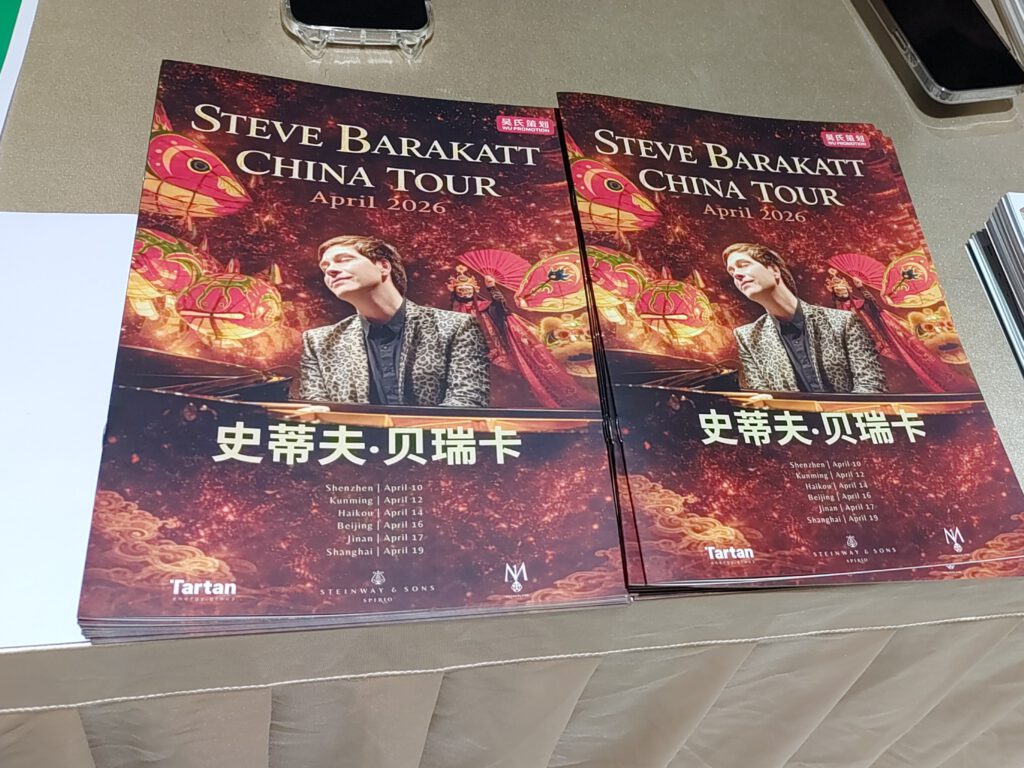
You are from a Lebanese family, born and raised in Canada, and your mother tongue is French. Besides, you have been traveling all around the world to give concerts all these years. You have mentioned your music as “multi-dimensional”. Is it because of your diverse background?
I was born in a land of multiculturalism, where we have lots of cultures. In my family, my mother was French, and my father Lebanese. So, it’s a good example of how to evolve in a community where you can learn different languages and different culture in general. It has a big impact till today, because it opened me to a different way of thinking, and also languages. And the Lebanese culture itself is a very strong musicality. Lebanon has strong music in the soul of the culture. It associates with joy – “joie de vivre” is a very famous sentence in Lebanese. For me, my uncles and my father and grandfather – they were musicians as well in the heart. They were not professional musicians, but they were really enjoying music. Every week, music was like a feast. We celebrated, ate, had fun, and we played music. So for me, music always associates with pleasure and good time.
Now I would like to talk about some pieces you are going to play tonight. Motherland is composed for the centennial anniversary of Lebanon, and you also mentioned dedicating the piece to your – father?
To my great grandfather. My family left Lebanon to live in Canada actually from my great grandfather. His name was Bacchus – the same name as the god of wine. He left Lebanon when the country had a very hard time at the end of the 19th century. He left to live in Canada and he started a new life. He had a wife in Canada, and he had babies and family. Here I am after three generations.
So, Motherland expresses some of your personal emotions deep in your heart?
Yes, it does. It was (written) after many trips to Lebanon. I explored the country before I composed the music. I explored the region. I discovered the village where my great grandfather was born. I visited the place, the area, discovered the real culture of Lebanon.
That’s why we can hear the oud and the nay flute playing the vivid middle eastern tunes inside.
Yes, it’s a combination of east and west, which is also part of the Lebanese heritage. Lebanon has a very strong influence from the European culture as well as the middle eastern and Asian culture. So Lebanon is at the center of many civilizations.
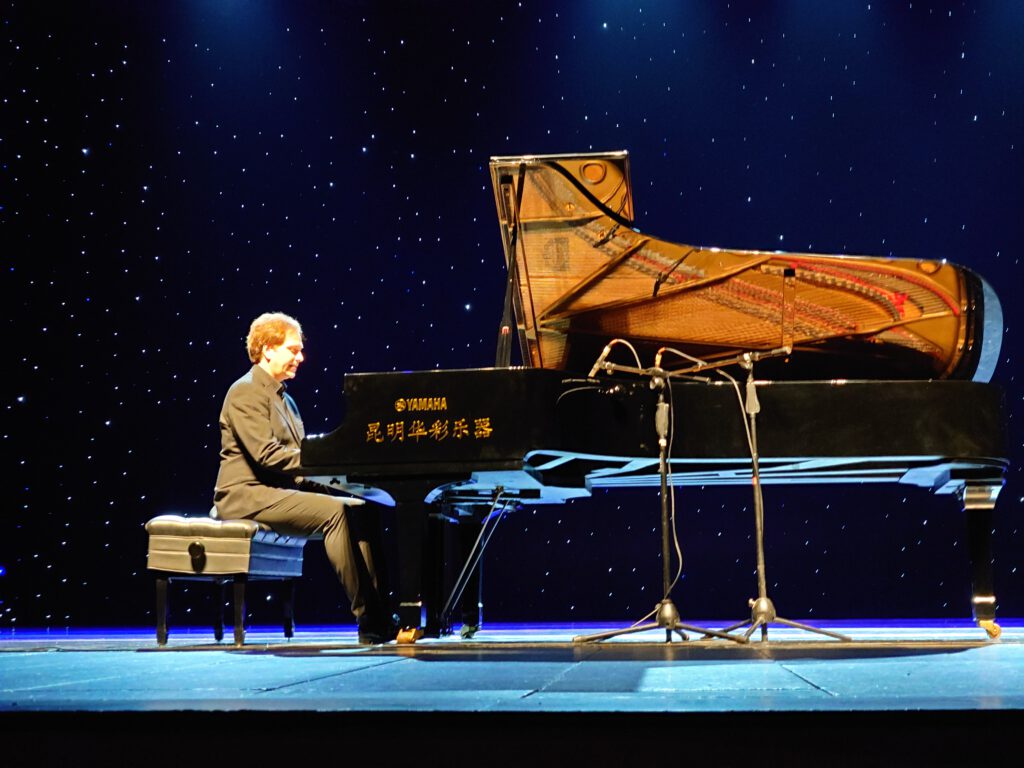
Cedars of Lebanon sounds more blue and melancholy. Why do you want to portray cedar – the symbol of Lebanon – in this way?
Actually, Cedars of Lebanon is the most favorite here in China. This is my piece that has been the most streamed so far here in China. And I’m very proud of it, because it represents something very important for me. I know that the Chinese people like cedar. I know that it’s part of the culture. And this tree is meaningful for Lebanese, because they survive thousands of years and they are at very peak of the mountain. We call it “the miracle of Lebanon” and “cedar of god”, because it has survived so far a lot of different things, and they are still here today.
The UNICEF anthem Lullaby is a meaningful work you are proud of. Was it composed before you became the UNICEF ambassador or after? How did you get inspired? And what do you want to express through the beautiful melody?
During (the ambassador tenure). When I was appointed UNICEF ambassador in 2007, I discovered UNICEF, and embarked on two missions around the world, especially in India at the time, and in Ukraine as well. I’ve been in many countries and very touched by what I have seen, because it’s for sure you realized quickly that children need a lot of support, even today. I realize that the world is unfortunately not fair for everybody. So, this is also one of the reasons why I started this initiative. It started with Mr. Harry Belafonte, who was also an UNICEF ambassador, and a great activist, who was behind We Are the World. Harry Belafonte approached me, and we had discussions in Canada about creating a music initiative for UNICEF. So, this is how it started. And then we decided to bring on board several musicians, ensembles and orchestras around the world to create a lullaby involving a lot of musicians and ensembles. So it started by one idea, actually a small idea, and it took almost a year to put together the entire anthem production with the music video. It premiered on November 20th, 2009, and was performed by several orchestras around the world on five continents. We also had an official broadcast from the international space station. So, that was an important day and the goal was to make sure that the people remember how important UNICEF and the rights for children can change the world actually.
May I ask why don’t you add lyrics to this choral music?
I thought and I still think that the universal language is music. At the moment I still think it was a great idea, because everywhere when the music is performed, you don’t have the barrier of language. UNICEF is global in 193 countries around the world. So, if you choose one language, unfortunately, it creates a certain limitation in a way. We could have done several languages but again it is impossible to reach all languages, so we prefer to use the most universal one which is music.
I personally like Riding Around the Forbidden City very much. The theme is a funny pentatonic tune. Any stories behind this piece?
I was in Beijing then and I have traveled many times in Beijing. I really love Beijing. I think it’s a great city with history and culture. When I was at the Forbidden City for the first time, I felt inspired. I felt it was a great place. I felt it was inspiring. I created this music inspired by the scale of China. Even when I play the piano solo, it still sounds very Chinese. Even though I don’t use other instruments in piano solo, it has a deep Chinese melodic and harmonic approach.
In this tour, all the pieces are going to be performed as pure piano solos. Do you think your live piano version will present a different picture, or will it remain the essence of your works?
The good thing about piano solo, which is something I also appreciate even for myself, is to go back to the roots of the composition. Even when I create a large production with hundreds of musicians, I always start with the piano solo usually in my process. So, when I go back on stage and perform the piano solo version, it actually goes back to the essence of the composition, back to the way I performed it at the beginning. I think it’s a very interesting process to go back, and I think that people can feel that the essence is there – the melody, the harmony. For me, it’s a very nice exercise and I enjoy the process of going back to the roots.
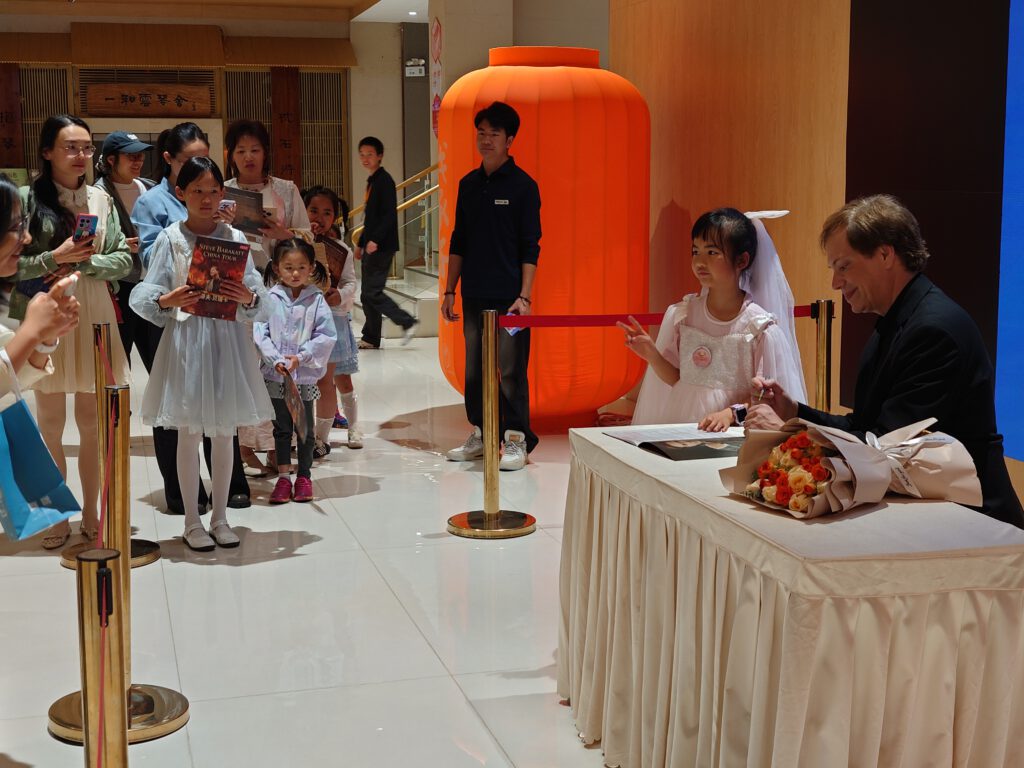
What do you prefer, composing behind the scenes or performing on the stage for the public? Why?
It’s an interesting question. To be honest, when I compose in my studio, I feel extremely happy. I don’t miss anything. And when I go on stage, I feel the same. I feel I love it. And I don’t miss any other part of my life. I feel that to be on stage is magical. So I’m happy where I am. I’m very fortunate to feel this way. I love touring. I love meeting people. I think it brings a very intense energy. While being behind the scene is mostly something I do with my own rhythm. I wake up in the morning, have my coffee, go to write the music. I work in my studio, so it’s something more personal, something that I keep a little bit intimacy. When I do it in my world, I enjoy it too. I also enjoy traveling, like today in Kunming, it’s a fantastic opportunity to discover China – I’ve never been to this region – to discover the food, to discover the beautiful sun, and the beautiful light.
With so many identities – producer, pianist, composer, creative director, studio artist – how do you want to be remembered by the public?
The most important thing frankly is how I can touch the world and the listeners. For me, this is the most important. If you ask me the moment touching me most is when people say: I listen to your music; it makes me feel good; it helps me in my life. This is the best reward I have and this is why I’m doing it. I also really like the fact that my music is also performed by young musicians as well as students who learn the piano or music. I’m very touched when I receive a video and I see people playing my own music. It’s very touching because I truly believe in the values of music. I think music can really help people grow, concentrate, and reach and accomplish their own dreams.
You learned classical piano for many years when you were young. What do those piano-learning years mean to you? What role does piano play in your life?
My piano is like music, it is my best friend. I always feel like music can bring me a lot. In life many things will change. You’re going to face struggles and problems. Some friends are disappearing. Unfortunately, some members of your family will disappear as well. This is life for everyone. But if you have music – music can become an anchor in your life. It’s something that will never disappear. So, I always feel music would be there for all the moments of my life. For me, music is very important and it’s always been like this. For me music is there despite any situation I’m facing.
There are many young piano learners in China. What suggestions would you give to them?
It’s a very interesting question. I think my father was right. He was a good school teacher. He had a very strong background to transmit values about education and passion and so on. And he always told me: always find a time for discipline, but always find a time for fun. I remember I was practicing the hard parts of music, which is learning music writing, and also playing and reading. It is hard when you start practicing, and the technical part is hard but you cannot go through all the efforts without taking time for pleasure. So if you do music only for the hard parts, you will stop, because you don’t have enough gratitude. You don’t feel enough pleasure. So nobody can survive if you only do the hard parts. It’s like life. If you only work in life, you will work, work, work. If you don’t have a certain pleasure of life, you don’t feel it worth living. So you cannot only do one thing, you have to mix – like between the theory of music and the technical part of music, and also find a way to enjoy the music. Play the music you like. Find some music that you really like. Enjoy it. Then, the next day start again. Go back, start the hard part and the fun part. I think if you can balance, you will still love music. Your music will not become your enemy. It will become your best friend, hopefully.
© TANTANYY
For Audiences, Artists, and Theatres